Last-minute color adjustments made live inside disguise, on Sphere's media plane. Built by a working colorist, LastLight is now my own software, made with Claude AI.
The Lab
The real grading for Sphere happens in Baselight, a powerful real-time grading system I've used for most of my career. But Sphere is a 16K image wrapped around 17,000 people, and the last few decisions can only be judged on the real screen, often when there's no time left to re-work a sequence and render it again. This page is about that last step: how I make small color adjustments live on the media plane, and LastLight, the software I'm building to do it better.
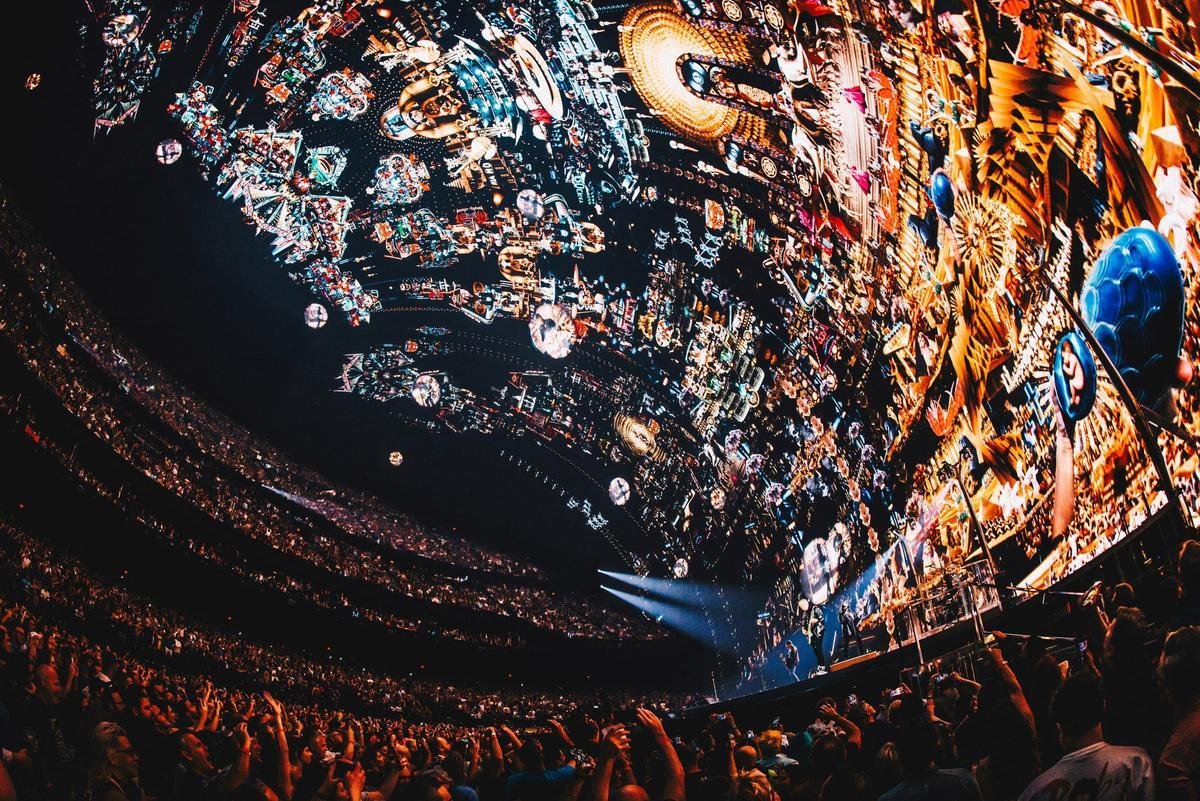
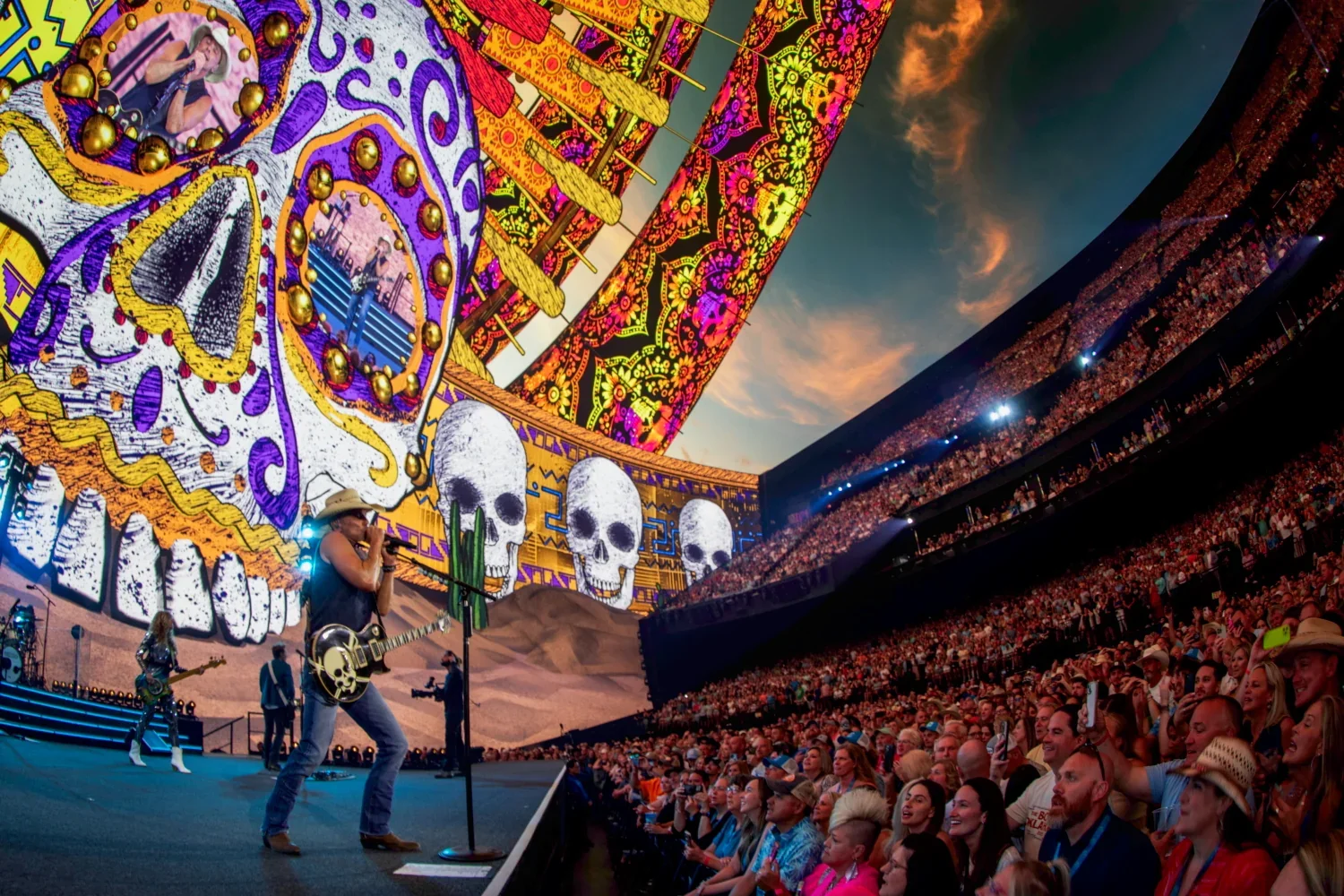
Even when content is made on a fully calibrated setup, it never looks quite the same on Sphere's media plane. The screen is calibrated too, but its sheer scale changes how we perceive color and density. A shot that looks perfectly balanced on a reference monitor can feel heavier, brighter or more saturated once it's wrapped around an audience.
We do most of the grading on glass in Burbank and validate it in Big Dome, our quarter-scale replica. But time on the real media plane is shared across the whole facility, and that's the only place you can truly judge the image. When you're there, every minute counts.
Kenny Chesney was unhappy with two background plates. He liked the lighting rigs in them, but didn't want the Sphere structure visible behind them.

The usual answer would have been to send the shots back to VFX for a full rework. Instead, we made a grading adjustment on the spot that pulled the structure back while keeping the rigs intact. Shaun Silva, the show's creative director, showed the change to Kenny the next morning.

It was a fast, simple fix that saved time for production and for the artist. Shaun valued the extra creative control over the look and feel of each song, and our internal team noticed how much faster the work moved, especially being able to grade against the live IMAG composite.

See the Kenny Chesney Residency